
Fields Behind Lake County Property Tax Records
Valuation and collection live in different systems. The Assessor's XSoft record carries the property ID, the address, and the assessed-value context. The Treasurer's account holds the bill and shows whether it is paid or still due. The Auditor runs deductions and tax-sale redemption functions. Indiana's Department of Local Government Finance supplies the appeal framework. That framework sits above all of it.
| Record item | Question it answers | Official keeper |
|---|---|---|
| Gross assessed value | The assessed amount before deductions | Lake County Assessor |
| Deductions | Reductions used to reach net taxable assessed value | Lake County Auditor |
| Tax account | Amounts billed, payment route and account status | Lake County Treasurer |
| District label | The local taxing geography attached to the parcel | Assessor and tax systems |
| Sale status | Whether delinquency has moved into the tax-sale process | Treasurer and Auditor |
Indiana assesses real property at a 100 percent ratio tied to market-value-in-use. Even so, the assessed amount is not a forecast of what a sale would bring. Deductions shrink the net taxable figure while leaving the gross assessment untouched. A tax account, likewise, records a public charge and its payment history, not legal ownership. For the valuation side, use Lake County property value records. For recorded conveyance, use deed records.
Lake County Tax Search Keys That Actually Work
The official Lake County Treasurer tax search offers several routes into a tax account. Its own instructions favor a broad first query. Less information can return more matches, and dropping a street direction or type can rescue an address the portal formats differently.
| Search route | Portal entry | Useful detail |
|---|---|---|
| Real estate | Real Property Number | Use the full 45-00-00-000-000.000-000 format |
| Party | Owner/Business Name or Last Name | Broaden spelling when the initial result is empty |
| Mail destination | Mailing Address | PO boxes have separate entry guidance |
| Physical parcel | Location | Try without direction and street type |
Selecting a match and then "View Account" is the documented route to the bill and payment screen. The official search page presents distinct owner, mailing, and location fields on one form. View the Treasurer search instructions and fields.
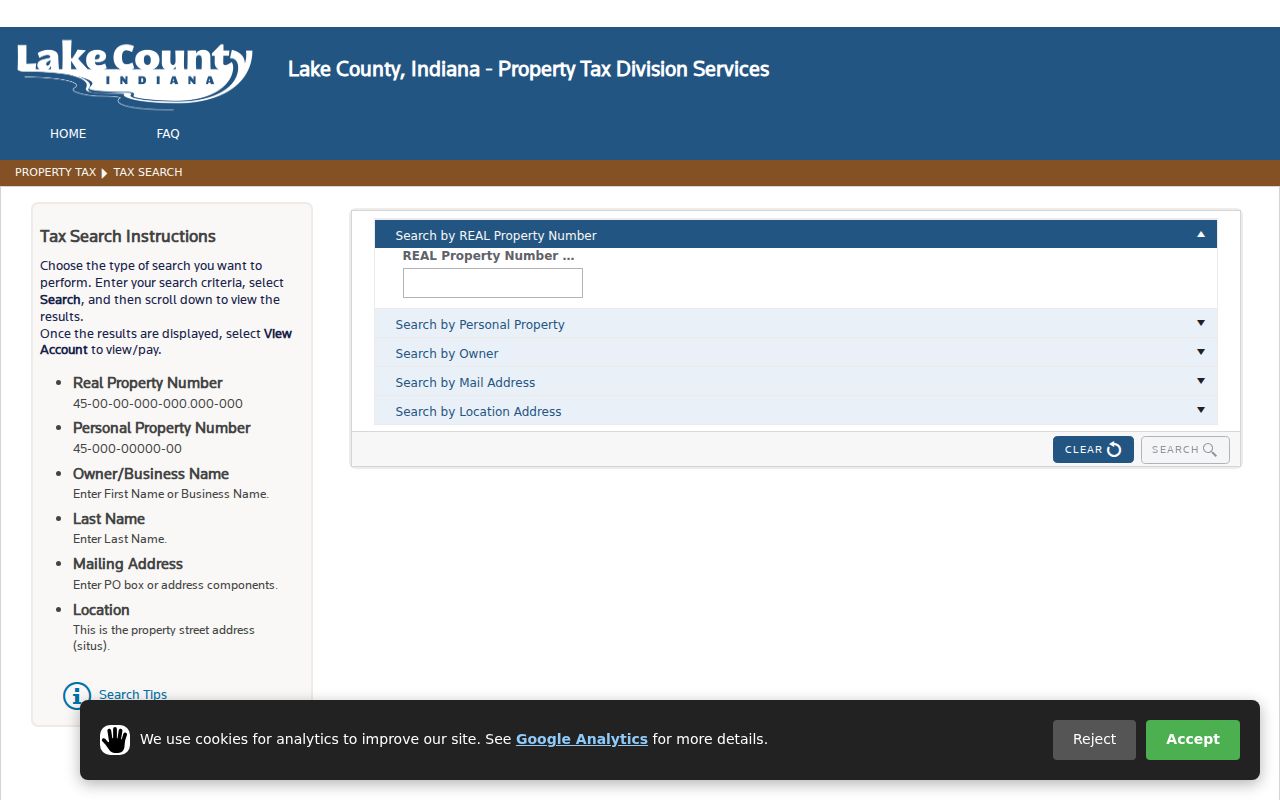
Those separate inputs explain why a situs address never belongs in the mailing-address box. The parcel number is the cleanest key for moving between county systems.
Lake County Assessor Values Feed the Tax Account
The Lake County Assessor's XSoft portal covers the valuation side of the record. Its public data-only screen accepts an owner, address, or property number. Results show Property ID, Owner Name, Address, and City, with Map, Detail, and Services actions. Advanced search adds minimum and maximum assessed value. It also covers sale date and price, year built, living area, acreage, property class, neighborhood, and district. Those filters make it easy to compare similar assessment records. A portal match is still not a tax bill. Carry the property number to the Treasurer service. Confirm both systems describe the same parcel. XSoft notes that its data is supplied as is. It directs questions to the Assessor at 219-755-3100. Open the Assessor's property and value route.
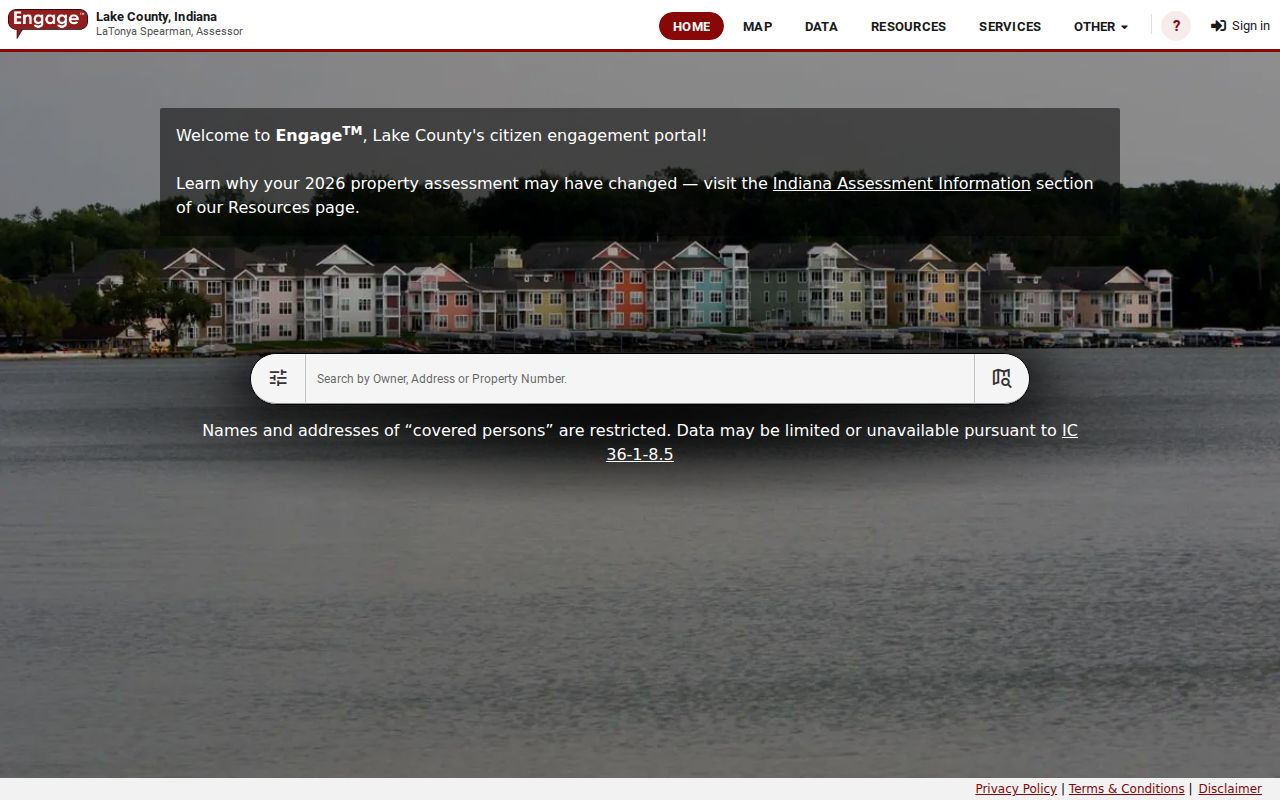
The Assessor screen supplies the assessment context. Compare it with the Treasurer account rather than substituting one for the other.
District Labels and Deductions Change the Lake County Total
XSoft district choices reveal more than a city name. Hammond Corporation sits in North Township. Merrillville Corporation sits in Ross Township, and Crown Point Corporation sits in Center Township. Combined school, sanitary, and water district labels also appear. Two nearby parcels can carry different taxing geography even when their mailing city looks identical.
Indiana deductions reduce gross assessed value to net taxable assessed value. The DLGF deductions and credits guide routes filings through the county Auditor. It notes that a sale or title change can affect eligibility and reapplication. Read the deduction line on the record. Do not assume a previous owner's treatment carries over.
Keep the numbers separate. Gross assessed value, net taxable assessed value and the final bill are connected, but they are not interchangeable. A deduction changes the taxable base; it does not rewrite the parcel's deed or mapped boundary.
Trace a Lake County Tax Bill from Address to Account
Fix the parcel identity before interpreting any dollars. The same street number can repeat across municipalities, and a mailing city can differ from the taxing district. Keep the full APN punctuation intact when moving between county systems.
- Find the address in XSoft and copy the complete property number.
- Search the Treasurer account by that real-property number and open “View Account.”
- Compare the billed parcel with the Assessor address, district and assessed value.
- Check deductions through the Auditor and follow any published delinquency or sale notice separately.
- Gross assessed value
- The county's assessed amount before eligible deductions.
- Net taxable assessed value
- The figure remaining after applicable deductions.
- Taxing district
- The combination of local jurisdictions used for the account.
- Tax-sale certificate
- An interest created through the statutory sale process, subject to redemption rules; it is not the same as an ordinary deed.
The 2026 Lake County Tax Sale Requires Parcel-Level Reading
The county's 2026 tax-sale notice publishes the registration, online-sale, and redemption framework. It also warns that a listed property may lack a guaranteed street address. It may lack a common description too. That warning makes the legal description and APN more dependable handles. They beat an auction label or map pin. A minimum bid can include more than the past-due tax. A certificate remains subject to the statutory redemption process. Anyone studying a distressed parcel should read the official notice. Identify it in GIS. Inspect the tax account. Review the recorded instruments. Paying or bidding on an account is no shortcut to a title conclusion.
Timely record, limited meaning. A sale list shows the status of the tax process at publication. Confirm later changes with the Treasurer or Auditor before relying on it.
Indiana Tax Caps Are Not a Single Lake County Rate
Indiana's constitutional property-tax caps commonly group homestead property, other residential and agricultural property, and other real or personal property. These three classes fall into 1 percent, 2 percent, and 3 percent categories. They limit qualifying liability as a share of gross assessed value. They do not replace the underlying assessment, deductions, district rates, or account calculation. The DLGF Property Tax 101 material explains the statewide structure. Have an individual Lake County property tax question? Set that framework beside the actual county record. Never infer a bill by applying one percentage to a sale price.
Contest a Lake County Assessment Through Indiana's Route
An assessment dispute starts at the county Assessor's office. From there, Indiana lays out a formal ladder. Form 130 moves the matter to the Property Tax Assessment Board of Appeals, and unresolved cases can continue to the Indiana Board of Tax Review or the Indiana Tax Court. Objective errors, like wrong square footage, call for different proof than disputes over condition or comparable sales. Sort the evidence to match the real problem.
The DLGF appeal guide and its forms page are the authoritative starting point. Indiana's citizen guide says an appraisal is not required just to file. Photos, corrected measurements, recent sales and comparable property records still make a factual claim easier to evaluate.
See the state appeal route and Form 130 information.
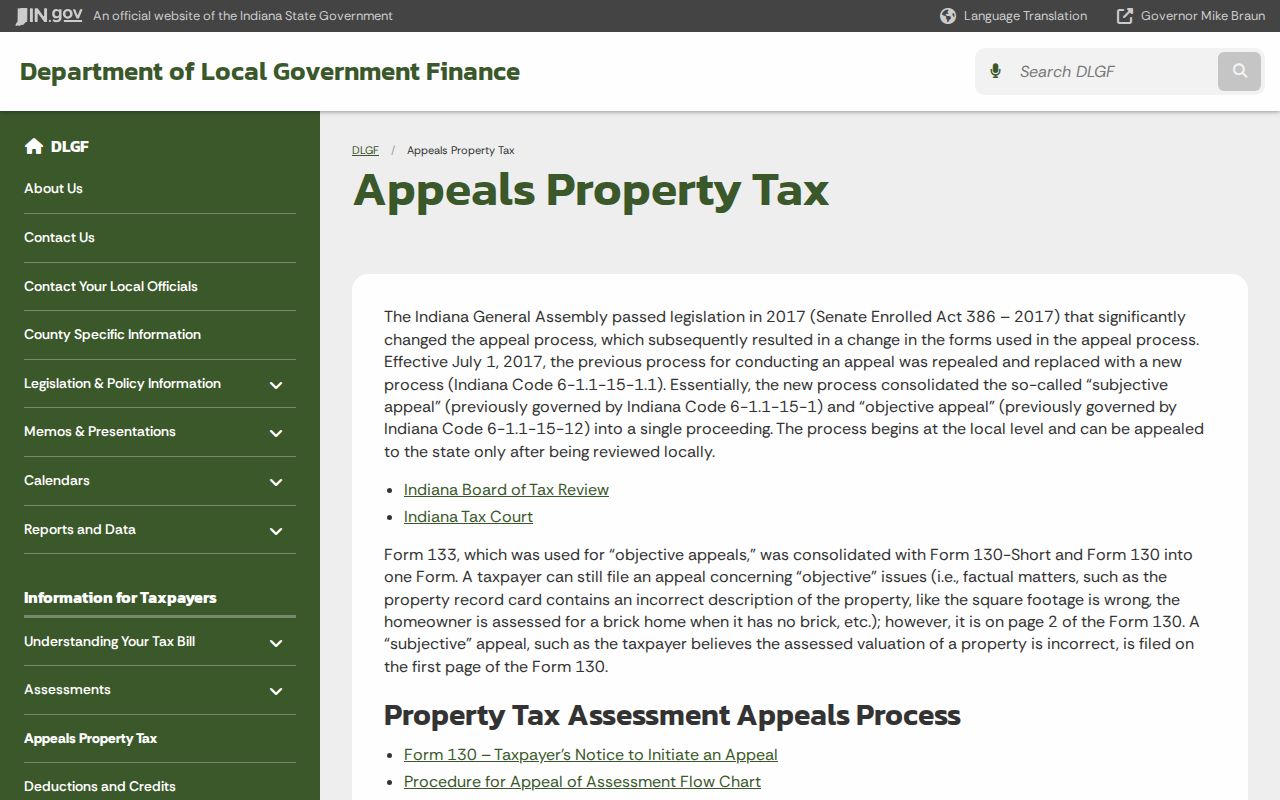
The state guidance sets the sequence. Current notices and forms control the filing date for the particular assessment year.
Use the date on the notice. Indiana links the initial filing period to the notice and statutory calendar. Verify the current deadline with the Lake County Assessor rather than relying on a date from an older guide.
Lake County Property Tax Help Beyond the Portal
If the tax website times out, produces several similar matches or does not explain a status, county counters remain official access channels. The Treasurer maintains service locations in Crown Point, Hammond and Gary. The Assessor answers assessment and parcel-card questions at 219-755-3100, and the Auditor handles deduction and redemption functions.
A focused request should include the complete property number, situs address, owner name as displayed, tax year and the specific record sought. Indiana's Access to Public Records Act, Indiana Code 5-14-3, provides a request route for non-exempt agency records, but an APRA request is not needed when a counter or published account already supplies the answer. Certified or office-authenticated material should be requested directly from the relevant keeper.
The Treasurer's county page documents online payment by credit card or e-check, but the current portal should be checked for convenience charges and the tax year displayed before submitting funds. Preserve the confirmation separately from the assessment record. A payment receipt shows a transaction on an account; it does not correct an incorrect parcel description, establish a deduction, or resolve who holds title.
The three county counters also matter when a name query produces several parcels or an account is difficult to open online. Bring the formatted real-property number and specify whether the question concerns a balance, payment history, delinquency, sale status, assessment, or deduction. Crown Point, Hammond and Gary Treasurer locations provide official alternatives during published weekday service hours. Questions about the physical characteristics or valuation belong with the Assessor, while the Auditor is the better route for deduction filings and redemption administration.
Older material can require a written request identifying the tax year and record type. Ask the originating department whether a copy can be certified and what current fee applies rather than assuming an ordinary browser printout has the same status. This division of responsibility is central to Lake County property tax research: each office can authenticate only the portion of the record it maintains.